A pre-shipment inspection is a buyer-side check of finished trailer units before they leave the factory, usually carried out by a third-party inspection body appointed by the buyer or agreed by both parties. It is a separate gate from the factory’s own in-process QC, and it covers appearance, dimensions, function, documentation and packing. Agree the sampling plan and acceptance criteria in the purchase order.
This article covers the pre-shipment inspection of a production order only — not customs clearance and duties and not container space optimization — so we will stay on the inspection itself rather than the paperwork of import or the arithmetic of loading.
Pre-Shipment Inspection Is Not the Same Thing as Factory QC
A pre-shipment inspection is a buyer-side acceptance gate applied to finished goods, not a continuation of the factory’s production-line quality control. The PSI is the last check on completed units before dispatch, carried out on behalf of the buyer by a third-party inspection body that the buyer appoints or that both parties agree to in the contract. The factory’s in-process QC is a different gate: it runs during fabrication, at material receipt, cutting, welding, galvanizing and assembly, and keeps the process inside specification. The PSI does not repeat those checks; it asks whether the finished, packed units conform to the purchase order.
The two gates differ in timing, ownership, reference and consequence.
| Aspect | Factory in-process QC | Pre-shipment inspection |
|---|---|---|
| Timing | During fabrication, at each production stage | After units are complete and normally packed, before dispatch |
| Who performs it | The manufacturer’s own quality staff | A third-party inspection body appointed by the buyer or agreed by both parties |
| What is examined | Work in progress, process settings, welds, coating | Finished units drawn from the completed order |
| Reference | Workshop drawings, process specifications | The purchase order and the agreed acceptance criteria |
| Outcome | Rework before the unit is finished | Release, hold or rework of the finished batch |
A factory QC report is evidence of how the order was built, not an independent record of the finished goods, and a PSI cannot repair a process that has drifted — it can only catch its output. It is also an acceptance check, not a certification activity: where a regulated item is involved, who may decide conformity belongs to the relevant authority or your notified body, so write that boundary into the inspection scope.
What a Pre-Shipment Inspection Covers
A pre-shipment inspection checks five categories — appearance and finish, dimensions, function, documentation and packing — against the purchase order and the agreed specification. The checklist below describes the kind of checks normally performed; it does not set tolerances, acceptance numbers or defect counts, because those belong in the purchase order and should be confirmed with the relevant authority, the inspection body and the agreed specification.
| Category | Checks performed | Typical defects found |
|---|---|---|
| Appearance and finish | Coating coverage, weld appearance, surface damage, markings, signs of corrosion or white rust on galvanizing | Scratches, missed coating, spatter, dents, inconsistent finish, early white rust |
| Dimensions | Overall length and width, coupling height, axle position, bunk or roller layout, frame squareness against the signed drawing | Out-of-square frame, bunk spacing off the drawing, coupling height off specification, misaligned holes |
| Function | Winch and strap operation, lighting continuity, brake and coupling actuation where fitted, roller movement, wheel rotation | Non-functioning lights, binding winch, seized rollers, loose fasteners, coupling that does not return |
| Documentation | VIN and rating plate, certificate or declaration of conformity where applicable, mill certificates, galvanizing certificate, invoice, packing list, inspection report | Missing documents, plate data disagreeing with the invoice, no traceability to the unit |
| Packing | Protection of coated surfaces, separation between units, blocking and lashing, moisture control, model separation | Units rubbing in transit, unprotected contact points, mixed models, inadequate blocking |
Appearance and finish checks concern delivered condition, not a re-run of a coating process test, and function checks are static and operational, not a road test: a PSI confirms that a winch turns or a coupling latches, not how the trailer behaves under tow. Recording every unit against the same five headings lets a buyer compare one order with the next and trace a disputed unit to a specific check.
Sampling Is Agreed in Advance, Not on the Day
The sampling plan and acceptance criteria belong in the purchase order, agreed before production starts, not negotiated on the inspection day. Buyers should agree the sampling plan and acceptance criteria in the purchase order. That line defines which units are drawn, how they are selected, what counts as a non-conformity and what the acceptance criteria are, and it removes the common dispute of an inspector arriving with one understanding of the standard and a factory expecting another.
If the order was developed as a custom build, the custom OEM process is where the hull data, the signed drawing and change control are fixed. Check that the revision cited in the purchase order matches the revision the shop built to; a mismatch is a documentation finding as much as a dimensional one.
The applicable acceptance level is a contractual choice that varies between buyers and markets, so do not assume a default and do not leave it to a verbal understanding. Confirm the sampling standard and its current text with a licensed inspection body, and use the same agreed criteria again for any re-inspection of reworked units. An inspection of a sample is not a guarantee about every unit; the purchase order should say so, because the factory remains responsible for the whole batch.
Document Check Before Anything Ships
The document check is a release gate in its own right: a unit that is physically correct but carries the wrong paperwork is not a conforming unit. Check the VIN and rating plate, the CoC or Declaration of Conformity where applicable, mill certificates, the galvanizing certificate to ISO 1461, the commercial invoice, the packing list and the inspection report. Confirm the current requirements with the relevant authority or your notified body, because the set that applies depends on the destination market.
The VIN and rating plate tie the unit to its identity and rated values, and our VIN and rating plate guide sets out what an importer should look for. For markets working through type approval, the CE and WVTA type approval guide describes the CoC framework. Other markets use different documents — Australian approvals use RAV and ROVER — so confirm which forms apply rather than assuming one set fits every destination.
| Document | What it establishes | What to cross-check |
|---|---|---|
| VIN and rating plate | Unit identity and rated values | Plate data against the unit, invoice and packing list |
| CoC / Declaration of Conformity (where applicable) | Conformity to the approved type | Fields against the unit and the approval documents |
| Mill certificates | The steel grade and heat supplied | Grade against the drawing, traceability to the order |
| Galvanizing certificate to ISO 1461 | The hot-dip coating met the specified standard | Coating reference against the order and finish |
| Commercial invoice and packing list | What is shipped and in what quantity | Model, quantity and identification against the units |
| Inspection report | The outcome of the PSI | Findings and photographs against the agreed criteria |
A practical routine is short:
- Read the plate on the unit and compare it with the invoice, the packing list and the CoC fields.
- Check that every certificate names a grade, a standard or a unit traceable to this order.
- Check that the packing list matches the models and quantities presented for loading.
- Check that the inspection report is signed, dated and refers to the same drawing revision.
- Record any mismatch as a non-conformity rather than resolving it verbally.
Do not invent document numbers or certificate serials in an inspection scope; those identifiers are set by the relevant authority.
Packaging and Container Loading Checks
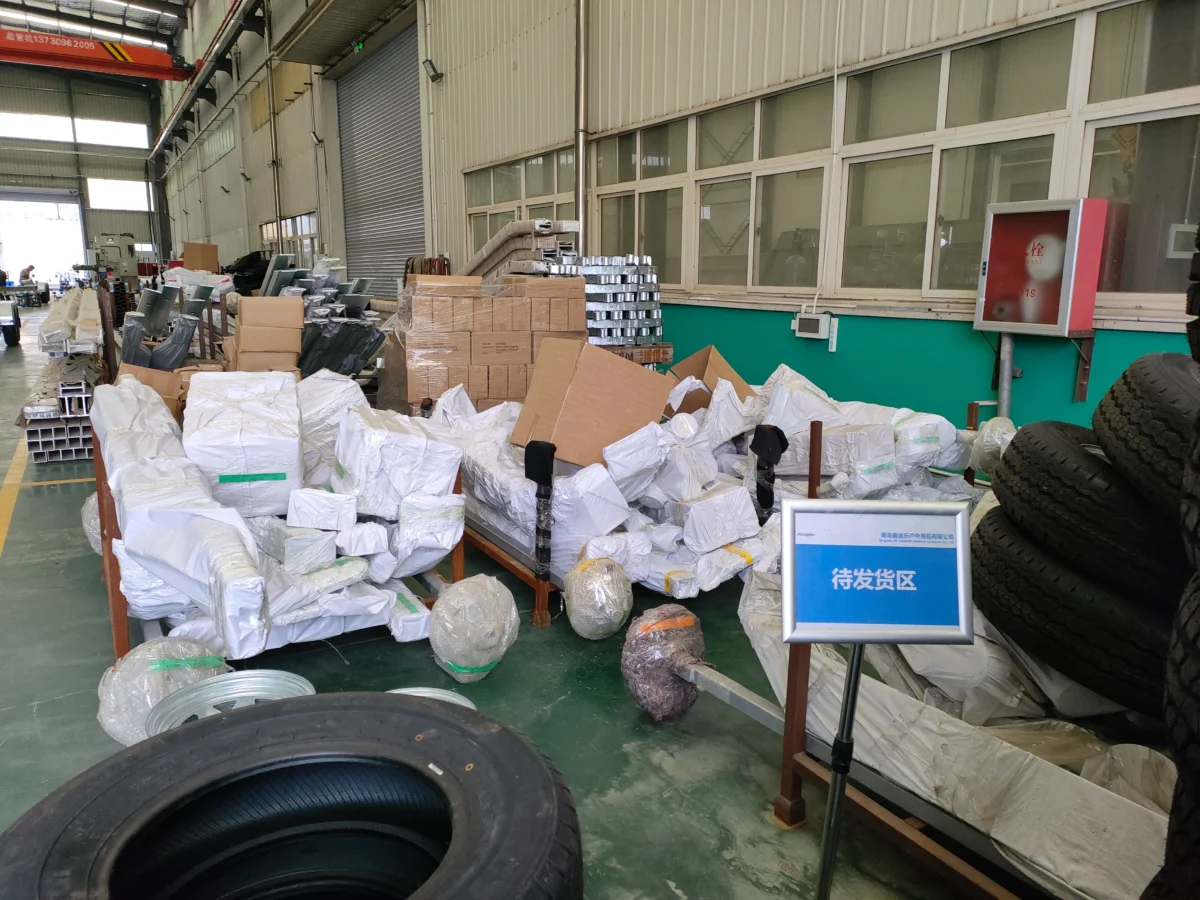
Packing is part of the inspection, because damage in transit is indistinguishable from a factory defect once the container is opened. Confirm that coated surfaces are protected at every contact point with non-abrasive material, that units cannot move against one another, that blocking and lashing hold the load without bearing on finished surfaces, and that galvanized parts are dry and clear of standing moisture. White rust on zinc is a storage and ventilation problem rather than a coating thickness failure, and any occurrence should be photographed before dispatch. Confirm also that different models are not mixed inside a pack without clear identification.
A loading-bay check normally covers four things:
- Impact and abrasion protection at straps, blocks, chains and every metal-to-metal contact point.
- Moisture control and ventilation around galvanized parts, with any white rust recorded.
- Blocking and lashing that restrain the load in two directions without crushing finished surfaces.
- Model separation, so each pack contains one configuration or is clearly identified unit by unit.
How many units fit in a container is a separate calculation, covered in the overseas shipping guide, and a PSI checklist should not repeat container volume figures. The inspector’s job is narrower: confirm that the units presented match the packing list, that their condition at loading is the condition in the report, and that the load is secured. Where a regulated securing requirement applies, confirm the current rule with the relevant authority.
What to Do With a Failed Inspection
A failed inspection produces a hold, not an argument: the batch is not released until the non-conformities are closed. The report records each finding against the agreed criteria, the affected units are segregated, the factory reworks them, and the inspection body re-inspects the reworked units against the same criteria. Only when the findings are cleared does the buyer, or a person authorized in writing, sign a release.
In sequence:
- Record each non-conformity in the report with a photograph and a unit identification.
- Segregate the affected units and mark them so they cannot be packed in error.
- Rework the units and document what was changed.
- Re-inspect against the same agreed acceptance criteria.
- Sign a written release once the findings are cleared, or record a written concession.
A concession is a commercial decision, not a technical verdict, and should be recorded in writing with the unit identified. A re-inspection is not a fresh negotiation: the criteria stay the same. The schedule for rework is a commercial matter for the contract, so an inspection scope should set the sequence and the signing authority, not a timeline.
Recording It so a Claim Is Possible
The value of a pre-shipment inspection is the record it creates, not the day it is performed. A claim is won or lost on contemporaneous evidence: a photograph without a date or a VIN is weak, and a report stored apart from the contract cannot be reconciled with what was ordered.
- Dated photographs of each inspected unit, including an overall view and close-ups of any defect, taken before loading.
- Unit and VIN identification recorded against every photograph, so each image can be tied to one specific trailer.
- A signed checklist showing every category, the checks performed and the result for each unit.
- A non-conformity register listing each finding, its disposition and the re-inspection result.
- Retention of the inspection report alongside the contract, the purchase order, the signed drawings and the commercial documents.
Keeping these together matters because a dispute concerns a unit no longer in the factory. A VIN on a photograph links the image to the unit, the packing list links the unit to the order, the purchase order links the order to the acceptance criteria, and the report links the criteria to an outcome. Do not set a retention period in a technical checklist; confirm how long the record must be kept with the relevant authority.
Frequently Asked Questions
What is a pre-shipment inspection for trailers?
A pre-shipment inspection is a buyer-side check of finished trailer units before they leave the factory. It is carried out by a third-party inspection body appointed by the buyer or agreed by both parties, and it is a separate gate from the factory’s own in-process quality control.
Who pays for a third-party inspection?
That is a commercial term fixed in the purchase order, not a technical rule. Commonly the buyer appoints and pays the inspection body, or the two parties agree how the cost is shared; confirm the arrangement in the contract before production starts.
Can I skip PSI for a small order?
A small order carries the same document and conformity risk as a large one, so skipping a PSI is a risk decision rather than a size rule. If you do skip it, keep a signed first-article check and a written document verification, and confirm the practice with a licensed inspection body.
Is a factory QC report the same as a pre-shipment inspection report?
No. A factory QC report describes in-process control during fabrication, while a pre-shipment inspection report describes finished units measured against the purchase order. They are produced at different times, by different parties, and against different references.
What documents should an importer check before a trailer ships?
Check the VIN and rating plate, the CoC or Declaration of Conformity where applicable, mill certificates, the galvanizing certificate to ISO 1461, the commercial invoice, the packing list and the inspection report. Confirm the current requirements with the relevant authority or your notified body.
Can a failed PSI be re-inspected?
Yes. The usual sequence is to record the findings, rework the affected units and re-inspect them against the same agreed acceptance criteria, then sign a release once the findings are cleared. The schedule is a commercial matter for the contract rather than a fixed timeline.
If you are putting together an inspection scope for an upcoming order, tell us the trailer configuration and the documents your market requires. We can align the build specification, the signed drawing and the paperwork so the inspection has one clear reference. Send your inquiry and we will reply with the relevant technical details.