
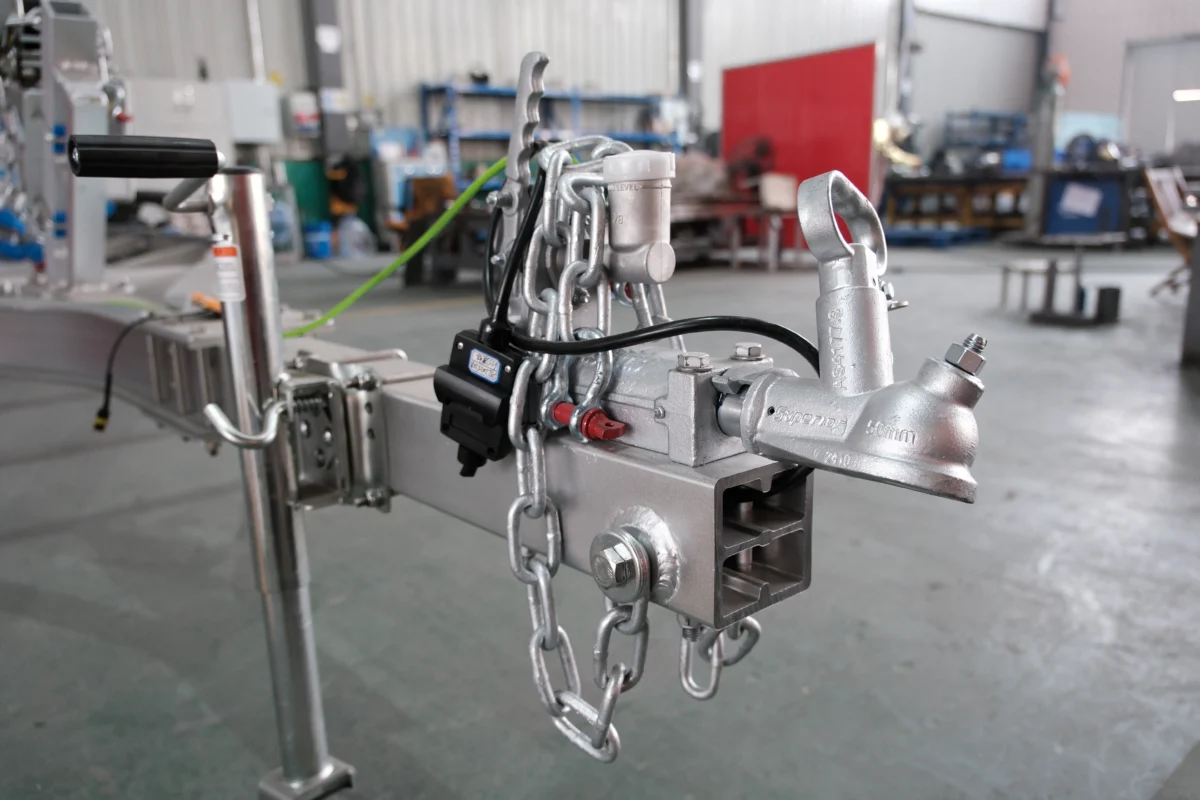
Boat trailer wiring uses a removable connector between the tow vehicle and the trailer. A 4-pin flat carries ground, tail/marker, and left and right turn-brake; a 5-pin adds a reverse lockout for surge brakes; a 7-pin (built to SAE J560) adds a 12V battery charge, electric brakes, reverse, and auxiliary circuits. Match the connector to your brake type and protect it from corrosion.
Why Boat Trailers Use a Removable Connector
A boat trailer plugs into the tow vehicle with a removable connector rather than being hardwired straight to the vehicle loom, because the trailer must couple and uncouple quickly at every launch and storage stop. A standard plug also lets one vehicle tow several trailers and one trailer be towed by several vehicles.
Removable connectors standardize the interface: the same 4-pin or 7-pin plug fits a wide range of tow vehicles, so you are not re-wiring for every change of tow car. The trade-off is a wear point at the joint, which is exactly why corrosion protection and a snug, seated connection matter more on a boat trailer than on a enclosed cargo trailer that never gets dunked.
Because the plug lives at the back of the vehicle and is routinely submerged, the connector is the part of the wiring most exposed to failure. Choosing the right type up front and maintaining it is the cheapest insurance against a no-lights citation or a brake that will not engage.
4-Pin Flat Connector
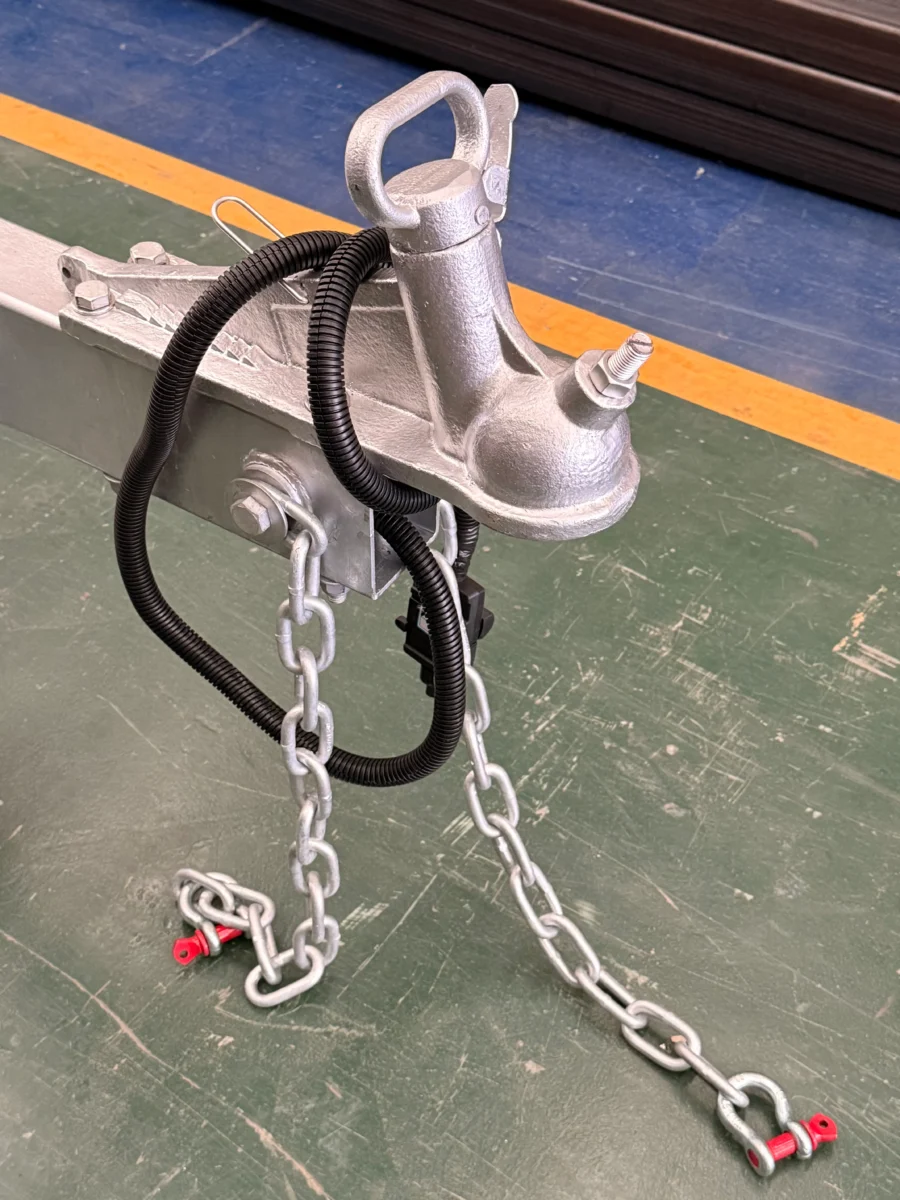
The 4-pin flat is the base standard for small trailers with basic lighting and no brakes. It carries the four circuits every road trailer needs: a ground, the tail and marker lights, and the combined left and right turn/brake signals.
On a 4-pin, the turn signal and brake share a circuit per side (the conventional “combined” system), so the same filament flashes for both left and right. This is enough for legal lighting on a light, brakeless trailer, but it provides no circuit for brakes, reverse lights, or charging — which is why heavier or braked trailers need more pins.
| Pin | Function | Typical wire colour (common convention) |
|---|---|---|
| 1 | Ground | White |
| 2 | Tail / marker lights | Brown |
| 3 | Left turn / brake | Yellow |
| 4 | Right turn / brake | Green |
Wire colours follow a common convention but are not universal; always verify each circuit with a tester rather than trusting colour alone, especially on a used trailer.
5-Pin Connector: Surge Brake Reverse Lockout
The 5-pin trailer connector keeps the four basic lighting circuits and adds one extra: a reverse lockout for surge brakes. Surge brakes activate when the trailer pushes forward against the coupler under deceleration; the problem is they also try to engage when you reverse, because reversing mimics that forward push.
The fifth pin feeds a solenoid that releases the surge brake actuator while the vehicle is in reverse, so you can back the trailer up without fighting the brakes. If your trailer uses surge (overrun) brakes and you reverse it — which is most launching and storage situations — a 5-pin (or a 7-pin wired for the same function) is the practical choice.
Note that whether your trailer requires brakes at all depends on its weight and the jurisdiction; in the United States, 49 CFR Part 393 sets brake rules for commercial motor vehicles, while private non-commercial trailers are generally governed by state law. Whether you need surge or electric brakes is covered in our boat trailer brakes guide, and the exact thresholds should be confirmed with your local authority.
7-Pin Connector (Blade and Round)
The 7-pin connector is the full-feature standard for braked trailers. It exists in a blade (flat rectangular) form common in North America and a round form used in some regions; both follow the SAE J560 standard for the circuits they carry, though pin layout differs between blade and round bodies.
On top of the four lighting circuits, the 7-pin adds the functions a braked, frequently-used trailer needs:
- +12V battery charge — keeps a breakaway battery or trailer battery topped up from the tow vehicle.
- Electric trailer brakes — a dedicated circuit controlled by the vehicle’s brake controller.
- Reverse — reverse lights, and often the surge-brake lockout signal.
- Auxiliary — a spare circuit for accessories or specific functions.
If your trailer has electric brakes, you need a 7-pin because only it carries the brake-control circuit. The 12V charge circuit also supports a breakaway system that must stay powered to meet the automatic-braking requirement found in many brake regulations.
| Pin (SAE J560 blade, typical) | Function |
|---|---|
| 1 | Ground (white) |
| 2 | Tail / marker (brown) |
| 3 | Left turn / brake (yellow) |
| 4 | Right turn / brake (green) |
| 5 | +12V battery charge (black/red) |
| 6 | Electric brakes (blue) |
| 7 | Reverse / auxiliary (purple) |
As with the 4-pin, treat wire colours as a guide and confirm each circuit with a tester, because aftermarket and regional wiring can differ.
Which Connector Do You Need?
The connector you need is driven mainly by brake type. A trailer with no brakes and only basic lights is fine on a 4-pin. A trailer with surge brakes that you reverse needs the reverse lockout, so choose a 5-pin or a 7-pin. A trailer with electric brakes requires a 7-pin for the brake-control circuit and, usually, the 12V charge line.
Match the tow vehicle too: a 7-pin vehicle can adapt down to 4-pin with a converter, but a 4-pin vehicle cannot magically supply electric brakes without adding a brake controller and the corresponding circuit. Plan the connector from the trailer’s needs, then fit the vehicle to match.
Beyond brakes, regional rules shape what is required; lighting, width, and brake obligations differ by country and sometimes by state, so our boat trailer regulations by country overview is worth a read before you standardize a fleet. When in doubt, check with your local authority or a licensed trailer inspector.
| Connector | Carries | Use it when… |
|---|---|---|
| 4-pin flat | Ground, tail, L/R turn-brake | Light trailer, no brakes, basic lighting only |
| 5-pin flat | 4-pin + reverse lockout | Surge brakes, you reverse the trailer |
| 7-pin (SAE J560) | Full lighting + 12V charge, electric brakes, reverse, aux | Electric brakes, or want charge + lockout in one plug |
Corrosion and Submersion Protection
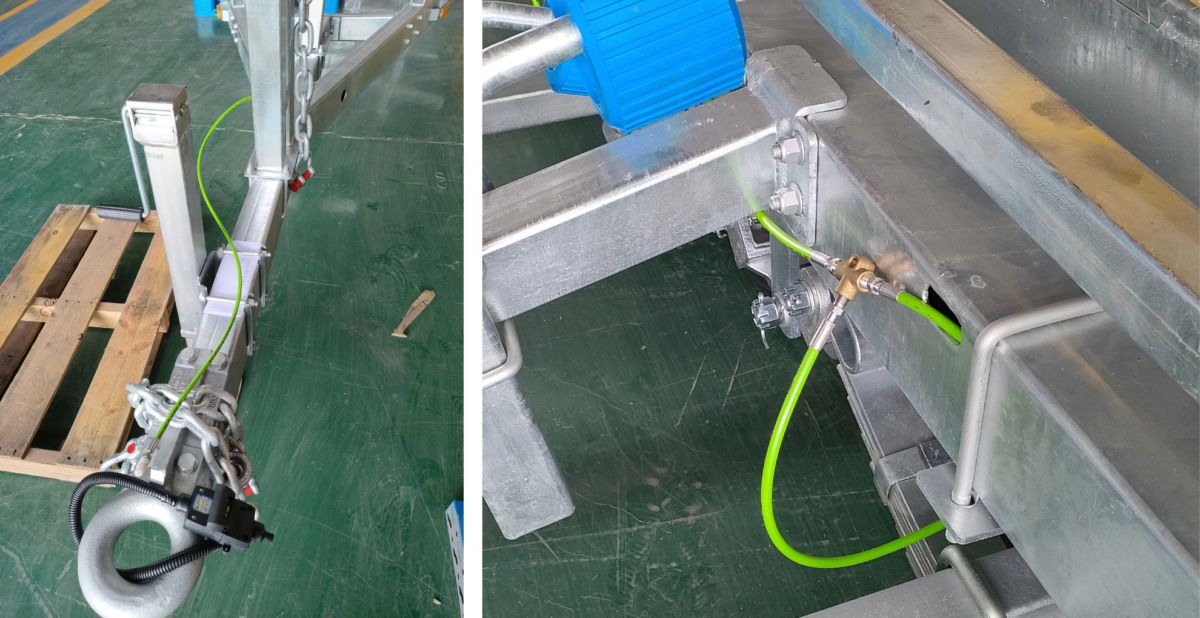
A boat trailer plug is dunked in water at nearly every launch, so corrosion at the connector is the most common cause of intermittent lights and brake drop-out. The fix is mostly about keeping water and salt out of the joint.
Use sealed connectors where possible, and choose submersion-rated plugs designed to keep water out when the connection is made and then briefly submerged. A thin film of dielectric grease on the contacts repels water and slows corrosion without conducting across pins if applied sparingly — do not pack the cavity so full that it prevents seating.
After saltwater use, rinse the plug and socket with fresh water and let them dry before reconnecting for storage. Our boat trailer maintenance guide covers the broader wash-down routine that protects the whole electrical system, and our trailer lights and wiring article goes deeper on the lighting side of the same circuit.
Basic Trailer Wiring Troubleshooting
Most wiring faults are simple open circuits, and a circuit tester (or a 12V test light) finds them fast. Work from the vehicle socket backward, one circuit at a time.
- Plug a tester into the vehicle’s socket with the ignition on and the relevant signal active (hazard lights, brake, reverse).
- Confirm each pin at the vehicle end is live; if a pin is dead, the fault is in the vehicle or its fuse/relay.
- Plug the trailer in and re-test at the trailer end; a dead pin after a good vehicle pin points to the connector or trailer loom.
- Inspect for the common causes: a corroded or loose pin, a broken ground (the most frequent single fault), a trapped or cut wire at the tongue, or water in a light housing.
- Clean contacts, reseat the plug, repair the ground first, and re-test before replacing parts.
A poor ground is so often the real culprit that a trailer with “no lights at all” usually has a clean fuse and a dirty ground connection. Fix the ground and many phantom faults disappear.
Connector Type Comparison at a Glance
The summary below recaps the three connectors so you can confirm your choice against your trailer’s brake and lighting setup.
| Feature | 4-pin | 5-pin | 7-pin (SAE J560) |
|---|---|---|---|
| Tail / marker | Yes | Yes | Yes |
| Left / right turn-brake | Yes | Yes | Yes |
| Reverse lockout (surge) | No | Yes | Yes |
| Electric brakes | No | No | Yes |
| 12V battery charge | No | No | Yes |
| Auxiliary circuit | No | No | Yes |
Frequently Asked Questions
What is the difference between a 4-pin and 7-pin trailer connector?
A 4-pin flat carries ground, tail/marker, and left and right turn-brake circuits only. A 7-pin (built to SAE J560) adds a 12V battery charge, electric brakes, reverse, and an auxiliary circuit, which is why braked trailers need the 7-pin.
Do I need a 5-pin connector for surge brakes?
If your trailer has surge brakes and you reverse it, the 5-pin’s reverse lockout stops the brakes from engaging while backing up. A 7-pin wired for the same function also works. Without that lockout, the surge brakes can bind every time you reverse.
What does SAE J560 mean for trailer wiring?
SAE J560 is the standard that defines the 7-pin trailer connector and its circuits for heavy-duty and braked trailers. Following it means the 7-pin on your trailer matches the 7-pin on a compliant tow vehicle, so the brake, charge, and reverse circuits line up correctly.
Why do my boat trailer lights work intermittently?
Intermittent lights on a boat trailer are usually corrosion at the plug or a poor ground, made worse by repeated submersion. Use sealed, submersion-rated connectors, apply dielectric grease sparingly, and fix the ground connection first when troubleshooting.
Can I use a 4-pin vehicle to tow a braked trailer?
A 4-pin vehicle supplies only lighting circuits, not the electric-brake or 12V charge circuits a braked trailer needs. To tow an electric-brake trailer you must add a brake controller and a 7-pin circuit; otherwise the brakes will not operate from the vehicle.
How do I stop my trailer plug from corroding?
Choose sealed, submersion-rated plugs, apply a thin film of dielectric grease to the contacts, and rinse the connector with fresh water after saltwater launches. Dry it before reconnecting for storage, and inspect pins for green or white corrosion each season.
Getting the connector right keeps your lights legal and your brakes working from the ramp to the highway. If you are building or specifying a trailer and want the wiring matched to your brake type, our aluminum alloy twin-axle boat trailer is wired to suit braked, saltwater service — contact us to discuss your specification.