
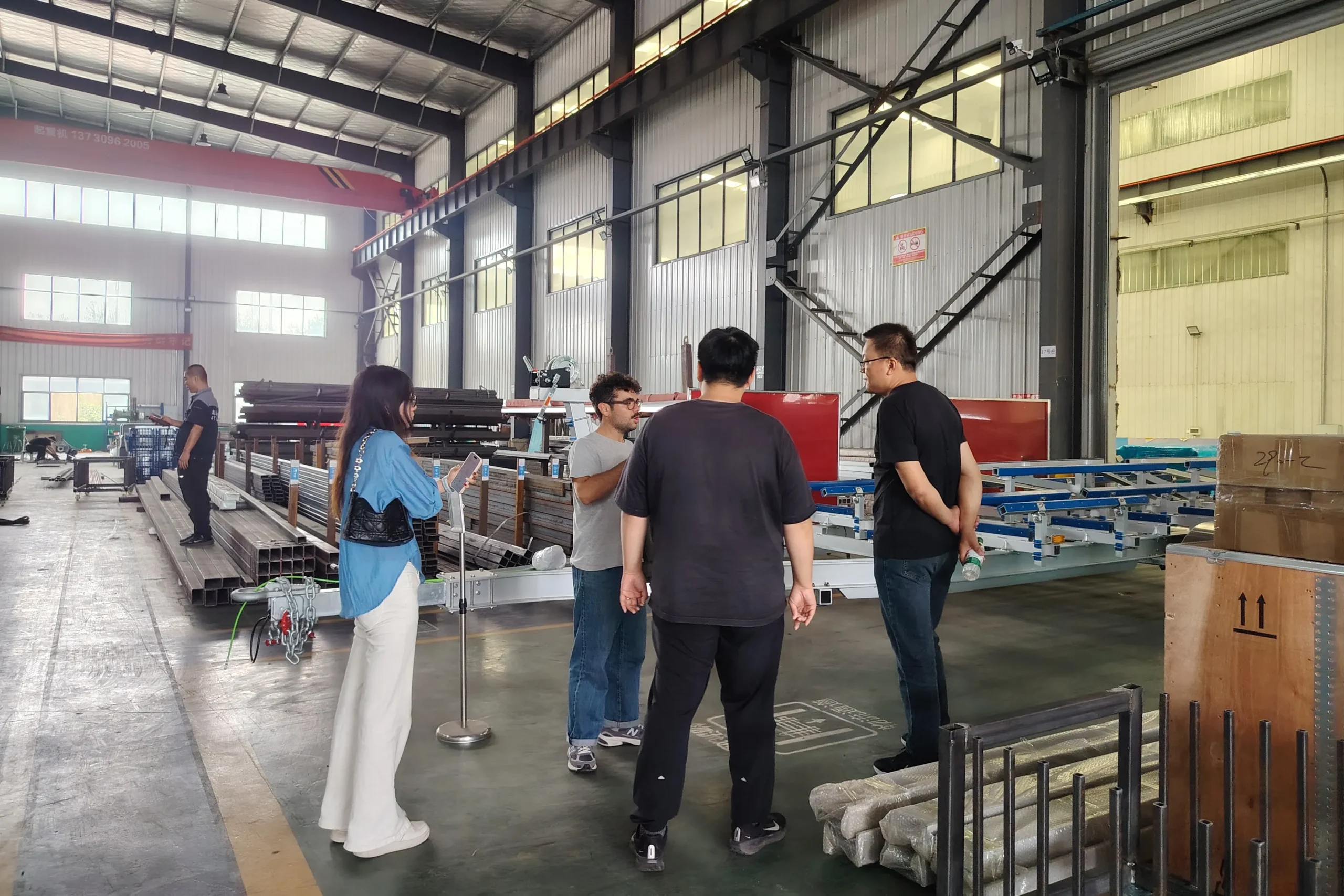
When importers choose a boat trailer manufacturer, they should audit more than price: verified certifications (ISO, WMI, CE, US DOT, EU WVTA, Australian VTA), weld and galvanizing quality, engineering documents and the supplier’s ability to pack for 40HQ container shipping. A factory audit and sample inspection catch most problems before a container leaves the port.
Why the manufacturer choice decides your margin
The manufacturer you pick sets your landed cost, your warranty exposure and your ability to clear customs, so the audit starts before you ask for a quote. A trailer is a welded steel or aluminum structure that must survive salt, road loads and submersion for years; the difference between a supplier that controls its process and one that assembles to order shows up as returns, rejected containers and certificates that do not match the market. For an importer moving containers at a time, one bad batch erases the saving on ten good ones.
Treat the supplier as a system, not a price list. The items below—certifications, factory control, documentation, welding, galvanizing and packing—are the ones that actually move risk. Verify each one against the destination you sell into, because a certificate that satisfies the EU says nothing about U.S. DOT or Australian VTA requirements.
Verify certifications before you request a quote
Certifications are the first filter, because they decide whether your shipment can be registered at all, so ask for the actual certificates rather than a claim in an email. A credible boat trailer manufacturer should be able to show quality and product certifications and the identifiers that tie a physical trailer to a certified build. Our CE and WVTA type approval guide explains what EU importers specifically need.
The relevant marks differ by market, and you should match them to where you sell. ISO 9001 covers the quality management system; ISO 3834 covers the quality of fusion welding, which matters for any welded frame; ISO 1461 is the hot-dip galvanizing standard. For market access, you need a WMI (World Manufacturer Identifier) so the VIN is valid, CE marking backed by EU WVTA under Regulation (EU) 2018/858 for Europe, US DOT compliance for the United States, and Australian VTA under the Road Vehicle Standards Act 2018 for Australia. Ask for the certificate numbers and the issuing body, and check they are current.
| Certification / mark | What it proves | Primary market |
|---|---|---|
| ISO 9001 | Documented quality management system | All markets (baseline) |
| ISO 3834 | Quality of fusion welding of the frame | All markets (baseline) |
| ISO 1461 | Hot-dip galvanizing coating spec | All markets (baseline) |
| WMI | Valid World Manufacturer Identifier for VIN | Required for VIN issuance |
| CE + EU WVTA | Whole-vehicle type approval, Reg. (EU) 2018/858 | European Union |
| US DOT | U.S. compliance / conformity documents | United States |
| Australian VTA | Vehicle type approval under RVSA 2018 | Australia |
Audit the factory: what a real visit checks
A factory audit answers the question price quotes never do—can this plant hold a spec across a hundred units, so build a checklist before you fly. Walk the production line and confirm the basics: are welds done to a procedure and inspected, is galvanizing done in-house or contracted (and to what standard), and are materials traceable to mill certificates? Inconsistent answers here predict inconsistent trailers later.
Look for evidence of process control rather than showpieces. Request to see welding procedure specifications and welder qualifications under ISO 3834, the galvanizing certificate to ISO 1461 for recent batches, and material mill certs for the steel or aluminum used. A plant that tracks these as routine documents them without drama; one that “can provide them later” usually cannot. You can read about Hyroad Trailer as an example of how a manufacturer presents its capabilities and certifications.
Engineering and documentation you must receive
The documents travel with the trailer through customs and registration, so missing paperwork is not a formality—it is a blocked shipment. For the EU you need the Certificate of Conformity tied to WVTA under Regulation (EU) 2018/858; for the U.S. the conformity documents and, for ocean freight, the Importer Security Filing (ISF); for Australia the RAV entry under the Road Vehicle Standards Act 2018; for New Zealand registration and a WoF. The trailer itself is classified under HS Chapter 87, heading 8716—confirm the subheading and rate with a licensed customs broker, because duties vary by subheading and trade agreement.
Beyond compliance papers, request the engineering package that proves the build: frame drawings, axle and load calculations, the rated capacity plate, and the bill of lading and commercial invoice that match the declared values. Our guide to importing boat trailers and duties lays out the clearance documents importers should expect from the supplier.
Welding and galvanizing quality
Welding and galvanizing are where trailer life is won or lost, so audit both with the standard in hand. Frame welds should be continuous, free of porosity and undercut, and performed under a controlled procedure consistent with ISO 3834; ask to see the procedure specification and a sample of finished, unpainted welds. A weld that looks neat but was done without procedure control can fail at the axle mount under repeated road load.
For galvanizing, confirm the bath and the standard. Hot-dip galvanizing to ISO 1461 specifies local and average coating thickness by steel thickness—from about 35 µm local (45 µm average) on steel under 1.5 mm up to 70 µm local (85 µm average) on steel over 6 mm—and the atmospheric corrosion rate typically runs 0.5–4 µm per year (ISO 9223 C1–C5). Any uncoated area beyond 0.5% of the surface, or larger than 10 cm², should be repaired. These numbers let you judge a sample trailer objectively rather than trusting “it looks galvanized.”
Packing for 40HQ container shipping
Container packing is where many first orders go wrong, because a boat trailer is a voluminous item, not a heavy one. A 40HQ container has internal dimensions of about 12.032 × 2.352 × 2.698 m, a door opening of 2.340 × 2.585 m, a volume near 76.4 m³, a tare weight around 3,900 kg and a typical maximum payload near 26.5 t. Trailers are “volume-first” cargo: the container usually fills with volume long before it reaches its weight limit, so how the supplier knocks the trailer down and stacks it decides how many units you get per container and therefore your landed cost per unit.
Ask the manufacturer for a packing plan and a load count per 40HQ, and check that the knocked-down configuration actually fits the door opening with margin. A supplier with repeat export experience will have a standard packing method, protective framing at the corners, and a way to prevent frame rub during transit; one without it will guess, and you pay for the empty space and the damaged units. Confirm the plan in writing and verify it on the pre-shipment inspection.
| 40HQ specification | Value | Why it matters for trailers |
|---|---|---|
| Internal dimensions | 12.032 × 2.352 × 2.698 m | Sets how many knocked-down units fit |
| Door opening | 2.340 × 2.585 m | Limits the widest single piece |
| Volume | ≈ 76.4 m³ | Trailers fill volume before weight |
| Tare weight | ≈ 3,900 kg | Subtracts from usable payload |
| Max payload | ≈ 26.5 t typical | Rarely reached by trailers (voluminous) |
Sample inspection and pre-shipment checks
A pre-shipment inspection turns the audit from paperwork into physics, so never ship a first order without one. Either visit for a sample run or hire a third-party inspector to measure the completed trailer against the drawing: frame dimensions, axle alignment, coupler rating, tire load range, light function and the coating thickness at representative points. Photograph the VIN stamp, the capacity plate and the certification marks so they match the documents you will file.
For a repeat order, keep the inspection but shorten it to the variables that drift: coating thickness, weld appearance at the axle mounts, and the packing count. Consistency, not heroics, is what you are buying from a hot-dip galvanized twin-axle marine trailer supplier or an aluminum alloy twin-axle boat trailer supplier—both should hold the same spec batch to batch.
Red flags that mean you walk away
Certain signals predict trouble reliably enough that they should end the conversation, so keep them on the short list. Walk away if the supplier cannot show current certificates for your target market, cannot produce mill certs or welding procedures, quotes a price far below peers without explaining the saving, or refuses any inspection or factory visit. Equally telling is vague packing—”we’ll fit as many as possible” means they have not done it. None of these is a negotiation point; each is a risk you cannot engineer out after the container ships.
Building a supplier scorecard
A scorecard keeps the decision objective across multiple candidates, so score each supplier on the same criteria with the same weights. Weight certifications and documentation heavily, because they gate market access; weight welding and galvanizing next, because they decide field failures; then packing efficiency and commercial terms. A supplier that scores well on process control but slightly higher on price is usually the safer bet than the reverse.
| Criterion | What “good” looks like | Relative weight |
|---|---|---|
| Certifications & docs | Current ISO, WMI, CE/US DOT/AU VTA for your market | High |
| Welding control | ISO 3834 procedure, qualified welders, clean samples | High |
| Galvanizing | ISO 1461 cert, coating thickness verified on samples | High |
| Packing efficiency | Documented 40HQ plan, protection, known unit count | Medium |
| Commercial terms | Clear FOB/CFR, lead time, warranty, inspection access | Medium |
Frequently Asked Questions
What certifications should a boat trailer manufacturer have?
At minimum, look for ISO 9001 (quality system), ISO 3834 (welding quality) and ISO 1461 (galvanizing), plus a WMI so the VIN is valid. For market access you also need CE marking backed by EU WVTA under Regulation (EU) 2018/858 for Europe, US DOT compliance for the United States, and Australian VTA under the Road Vehicle Standards Act 2018 for Australia. Always ask for the certificate numbers and issuing bodies, and confirm they are current for your target market.
How do I verify a trailer manufacturer’s factory?
Visit the plant or commission a third-party audit and check process control rather than showpieces. Request welding procedure specifications and welder qualifications under ISO 3834, the galvanizing certificate to ISO 1461 for recent batches, and material mill certs for the steel or aluminum. A capable plant produces these as routine documentation; reluctance to share them is itself a finding. Pair the audit with a pre-shipment inspection on a sample unit.
What documents do I need when importing boat trailers?
You need customs and conformity documents that match the destination. The trailer falls under HS Chapter 87, heading 8716—confirm the subheading and duty rate with a licensed broker. For the EU, a Certificate of Conformity tied to WVTA under Regulation (EU) 2018/858; for the U.S., conformity documents and the Importer Security Filing (ISF); for Australia, RAV entry under the Road Vehicle Standards Act 2018; for New Zealand, registration and a WoF. The supplier should also provide the commercial invoice, bill of lading and engineering drawings.
How many boat trailers fit in a 40HQ container?
It depends on trailer length and whether they are knocked down, and you should get the count from the supplier’s packing plan rather than assuming. A 40HQ offers about 76.4 m³ of volume, a 2.340 × 2.585 m door opening, a tare near 3,900 kg and a typical payload near 26.5 t. Because trailers are voluminous cargo, the container usually fills with volume before it reaches its weight limit, so packing method—not weight—decides how many units per container.
What welding standard applies to boat trailer frames?
The relevant benchmark is ISO 3834, which sets the quality requirements for fusion welding of metallic materials and applies to the welded frame. Ask for the welding procedure specification, welder qualifications and sample welds free of porosity and undercut. Combined with material mill certs and the ISO 9001 quality system, this is what separates a controlled build from an assembled-one.
Should I visit the factory or use a third-party inspection?
For a first order, do both if you can: visit to assess process control and then use a third-party inspector for the pre-shipment check on the actual units. For repeat orders, a competent third-party inspection plus the packing plan is usually enough. Either way, never ship a first container without an independent check of dimensions, coating thickness, light function and the VIN and certification marks.
Choosing the right boat trailer manufacturer is mostly about verifying what you cannot see from a quote sheet. If you want a supplier that documents its process, Hyroad Trailer is a manufacturer and exporter of galvanized and aluminum trailers—contact us for a quote and the certifications package for your market.