
Leaf-spring suspension uses stacked steel plates to cushion the load and is cheaper and easy to repair. A torsion axle carries each wheel on a rubber cord inside a sealed tube, giving a quieter, independent ride and better saltwater corrosion resistance. Choose leaf spring for occasional freshwater use and torsion for frequent saltwater or commercial service.
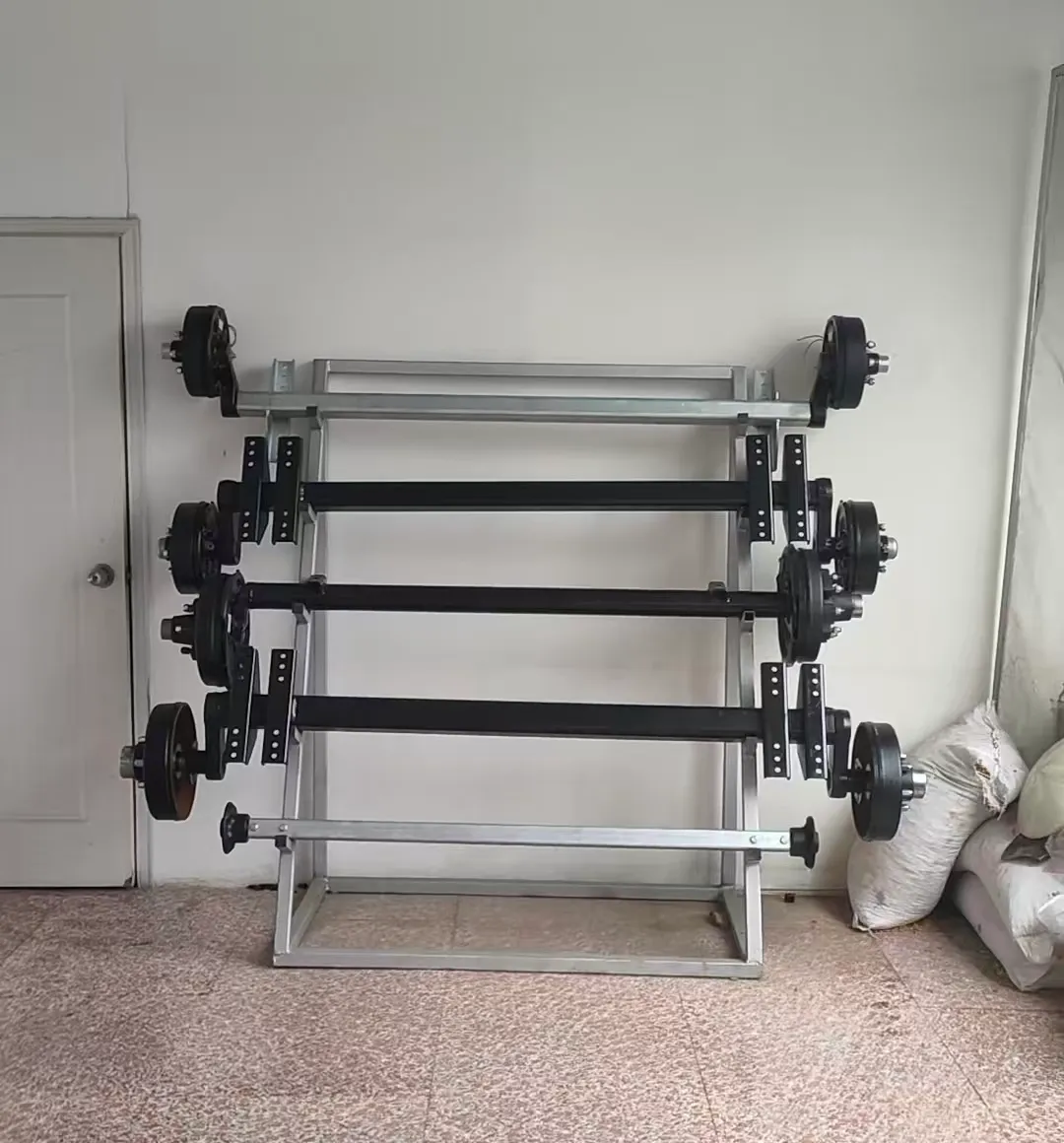
Choosing between a leaf-spring and a torsion axle is one of the first decisions you make when specifying a boat trailer, and the choice affects ride, corrosion life, repair cost and deck height. This guide explains how each suspension works and where each one makes sense, so you can match the trailer to how and where you launch. Both designs are proven, and neither is “wrong”; the right answer depends on your water, your budget and how much maintenance you are willing to do yourself.
How a leaf-spring suspension works
A leaf-spring suspension supports the trailer on one or more stacks of curved steel plates bolted to the axle and the frame. Each “leaf” is a long, flattened bar; several are clamped together with the longest on the outside, forming a spring pack that flexes as the axle moves up and down. The spring ends sit in hangers or shackles fixed to the frame, and the axle is attached near the centre of the pack by U-bolts.
As the wheel hits a bump, the pack flattens and stores energy, then returns the load to the road. This is a traditional, well-understood design that has been used on trailers and trucks for decades, and its parts are simple steel shapes that any trailer shop can measure and replace. Because the spring pack links both wheels on one axle, load applied to one wheel is partly shared with the wheel on the opposite end of the same spring, which is why a leaf-spring axle is described as a linked or shared suspension.
How a torsion axle works
A torsion axle suspends each wheel through a rubber cord wound inside a sealed steel tube, so each side moves independently. Inside the tube, a long rubber element is bonded between the tube wall and a square inner bar; the wheel arm is fixed to that inner bar. When the wheel rises, it twists the rubber, which resists and then returns the motion without any external spring.
Because the left and right arms connect to separate rubber cords, one wheel can travel up or down while the other stays put, which is why a torsion axle is described as independent suspension. The whole assembly is a sealed unit: there are no open leaves, no shackles and no exposed pivot that salt water can reach. Torsion axles are commonly supplied as complete pre-built units by suppliers such as Dexter and Lippert, which keeps installation straightforward but means the axle is generally replaced as a whole part rather than repaired piece by piece.
Ride quality and load sharing
Torsion axles ride quieter and let each wheel react on its own, while leaf springs pass load between both wheels on the same axle. With a torsion axle, a bump under the left wheel is absorbed by the left rubber cord and barely disturbs the right side, so the boat sees less twisting and the trailer tracks more evenly on rough ramps and washboard roads.
Leaf springs are firmer and transmit more motion, and because the spring pack connects both wheels, a hit on one side is partly passed to the other. That shared behaviour is not always a disadvantage: on a smooth road a leaf-spring trailer can feel stable, and the design is forgiving of uneven loads. For most recreational boat owners the practical difference is felt at low speed on rutted launch ramps and on long highway runs, where the quieter, independent action of a torsion axle is commonly preferred. If you tow a heavy offshore boat for long distances, the independent action also reduces the likelihood of one wheel pitching the hull on the bunks.
Saltwater durability
A torsion axle is a sealed tube that resists corrosion, whereas open leaf springs trap salt and rust. On a boat trailer the suspension is frequently submerged, so any exposed steel is in contact with brackish or salt water that accelerates rust. A torsion axle presents only its painted or galvanized outer tube and the wheel ends to the environment; there are no gaps between leaves where water and grit sit.
Leaf springs, by contrast, are a stack of plates with space between them, and that space holds moisture and road salt against the steel even after the trailer leaves the water. Routine rinsing helps, but the open design is inherently harder to keep dry. Pairing either suspension with a corrosion-resistant structure matters: a hot-dip galvanized boat trailer protects the frame and fittings, and the boat trailer bearings in saltwater still need regular attention because the hubs sit in the same wet environment regardless of which suspension you choose.
Repair and parts availability
Leaf springs are cheap and easy to source, but a damaged torsion axle is replaced as a whole unit. If a leaf breaks or a shackle bushing wears, you can buy a single replacement spring, a U-bolt or a bushing from almost any trailer parts supplier, often the same day, and fit it with basic hand tools. The parts are standardised and inexpensive.
A torsion axle fails in a different way: the internal rubber can age or the tube can be bent in a collision, and because the working parts are sealed inside, the usual fix is to unbolt the entire axle and fit a new one. That is a larger single job and a higher parts cost, though it happens less often. For an owner who wants to maintain the trailer themselves or keep a cheap spare on the shelf, leaf spring is the simpler proposition; for an owner who would rather avoid frequent small repairs, the sealed torsion axle trades repair ease for lower day-to-day attention. Either way, inspection of the wheel ends, lug nuts and brake hardware should be part of a routine schedule.
Weight and mount height
Torsion axles are typically lighter and mount underslung for a lower deck height, while leaf springs use a drop or underslung layout chosen for the frame. Because a torsion axle carries no separate spring pack or hangers, the assembly often weighs less than a comparable leaf-spring set, and the axle can be mounted below the frame (underslung) so the boat sits lower and is easier to launch and load. Leaf-spring trailers are usually built with the axle below the spring (also underslung) or with a drop-in spring seat; the choice depends on the frame rail height and the desired coupler height.
The table below summarises the common mounting options and what each one does to deck height. When specifying the boat trailer frame design, the suspension mount height has to match the frame rail and the coupler height so the trailer sits level behind the tow vehicle.
| Mount style | How it works | Typical effect |
|---|---|---|
| Drop axle (leaf) | Axle bent down so the spring sits above the beam | Raises the deck slightly; common on leaf builds |
| Underslung (leaf) | Axle located below the spring pack | Lower deck; widely used on bunk trailers |
| Underslung (torsion) | Axle tube mounted below the frame rail | Lowest deck height; simpler alignment to rail |
Upfront cost
Leaf-spring suspension costs less up front than a torsion axle. The materials are simple stamped and rolled steel, the design is mature, and the parts are produced in huge volume for trailers of every type, which keeps the price down. A torsion axle costs more because it is a sealed, rubber-filled assembly built to closer tolerances and often supplied as a branded complete unit.
The price gap varies with capacity and brand, so we will not quote a fixed figure here; in practice a buyer should expect to pay more for torsion at the point of purchase and to recover some of that through longer saltwater life and fewer small repairs. Check the latest pricing with the manufacturer for your capacity and configuration, because regional freight and material cost move the numbers. Where total lifetime cost matters more than purchase price, the corrosion resistance of the torsion axle can outweigh its higher sticker.
Which to choose
Choose leaf spring for occasional freshwater boating and torsion for frequent saltwater or commercial use. The decision comes down to how often the trailer is dunked, how much you value a quiet independent ride, and whether you prefer cheap easy repairs or lower maintenance. A practical way to decide:
- Count your launches per year. Few launches in fresh water favour leaf spring; many saltwater launches favour torsion.
- Decide who services the trailer. Owners who repair their own favour leaf; owners who want minimal upkeep favour torsion.
- Set your budget for purchase versus lifetime cost. Leaf is cheaper to buy; torsion can cost less to own in corrosive service.
- Match the axle count to the boat. See our guide to the single-axle vs tandem-axle boat trailer when choosing capacity.
- Consider the frame and finish together. An aluminum alloy twin-axle boat trailer pairs naturally with torsion axles for the lightest corrosive-service build.
For a weekend freshwater fisherman the leaf-spring trailer is hard to beat on value. For a saltwater charter operator, a marina fleet or anyone launching weekly, the sealed torsion axle is the more durable choice.
Leaf Spring vs Torsion Axle: Side-by-Side
The table below compares the two suspension types across the attributes that matter most when you specify a boat trailer. Use it together with the guidance above to settle the choice for your own boat and water.
| Attribute | Leaf spring | Torsion axle |
|---|---|---|
| Ride comfort | Firmer; transmits more motion to the hull | Quieter and smoother over bumps |
| Wheel independence | Load shared across the axle | Independent movement per wheel |
| Saltwater corrosion | Open leaves trap salt and rust | Sealed tube resists corrosion |
| Repairability | Cheap, easy, single parts | Whole-axle replacement |
| Weight | Heavier with the spring pack | Typically lighter per axle |
| Upfront cost | Lower | Higher |
| Best use | Occasional freshwater, budget builds | Frequent saltwater, commercial service |
Frequently Asked Questions
Which is better for a boat trailer: leaf spring or torsion axle?
Neither is universally better. Leaf spring is cheaper and easier to repair, which suits occasional freshwater use. A torsion axle is quieter, independent and more corrosion resistant, which suits frequent saltwater or commercial launching. Match the suspension to how often and where you put the trailer in the water.
Do torsion axles ride better than leaf springs on a boat trailer?
Commonly, yes. Because each wheel sits on its own internal rubber cord, a torsion axle absorbs bumps on one side without disturbing the other, giving a quieter, smoother ride and less twisting of the hull on the bunks. Leaf springs are firmer and pass more motion between the two wheels on the same axle.
Are torsion axles good in saltwater?
Yes, they are generally better than leaf springs in saltwater. The working parts are sealed inside a steel tube, so there are no open plates where salt and grit collect. The axle still needs the same hub and bearing care as any trailer, and the frame and fittings should be galvanized or aluminum for full corrosion protection.
Can you replace just one leaf spring on a boat trailer?
Yes. A broken or sagging leaf can be bought as a single replacement spring and fitted with U-bolts and basic tools, which is one reason leaf-spring trailers are cheap to maintain. A torsion axle cannot be repaired that way; a bent or failed unit is normally unbolted and replaced as a whole axle.
Why are torsion axles more expensive than leaf springs?
A torsion axle is a sealed, rubber-filled assembly built to closer tolerances and often supplied as a complete branded unit, so it costs more to buy. Leaf springs are simple stamped steel produced in very high volume. The higher purchase price of torsion is often balanced by longer life in corrosive service and fewer small repairs over time.
Do torsion axles have independent suspension?
Yes. Each wheel arm is fixed to its own internal rubber cord inside the tube, so the left and right wheels move independently. That is the main reason torsion axles track better on uneven ramps and washboard roads than a leaf-spring axle, where the spring pack links both wheels.
Still deciding which suspension suits your boat and launch routine? Our team builds both leaf-spring and torsion-axle trailers to marine specs and can recommend the right setup for your water and weight. Contact us for a quote and tell us how often you launch.
- 3‑in‑1 Hot‑Dip Galvanized Boat Trailer
- 40HQ container capacity
- aluminum vs galvanized trailer price
- axle configuration
- bearing buddies
- Boat Trailer
- boat trailer bearing maintenance
- boat trailer bearings
- boat trailer brake requirements
- boat trailer container loading
- boat trailer lights not working
- boat trailer price guide
- boat trailer suspension
- boat trailer suspension types
- boat trailer wiring
- breakaway system
- do boat trailers need brakes
- galvanized coating thickness
- galvanized vs painted trailer
- hot dip galvanized boat trailer
- how long does a galvanized trailer last
- how many axles do I need
- how much does a boat trailer cost
- how often to grease boat trailer bearings
- How to Choose the Right Boat Trailer
- ISO 1461
- Jet Ski Motorcycle Hauler
- landed cost
- leaf spring boat trailer
- LED trailer lights
- orsion axle boat trailer
- pontoon boat trailer bunks
- pontoon trailer
- pontoon trailer setup
- pontoon trailer width
- saltwater trailer bearings
- shipping a boat trailer overseas
- single vs tandem axle boat trailer
- SKD CKD trailer export
- submersible trailer lights
- surge vs electric trailer brakes
- tandem axle benefits
- trailer brake law
- trailer ground wire
- trailer resale value
- tri axle boat trailer
- tritoon trailer
- why do trailer bearings fail